
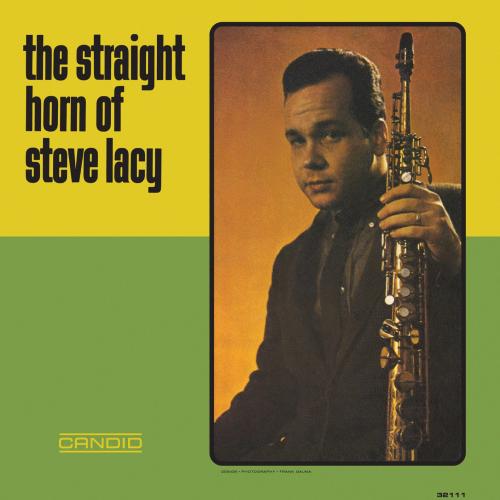
The Straight Horn Of Steve Lacy (Remastered) Steve Lacy
Album Info
Album Veröffentlichung:
2023
HRA-Veröffentlichung:
06.03.2026
Das Album enthält Albumcover
- 1 Louise (Remastered) 05:24
- 2 Introspection (Remastered) 05:32
- 3 Donna Lee (Remastered) 07:50
- 4 Played Twice (Remastered) 05:53
- 5 Air (Remastered) 06:38
- 6 Criss Cross (Remastered) 05:42
Info zu The Straight Horn Of Steve Lacy (Remastered)
Das im Titel dieses großartigen Albums aus dem Jahr 1961 erwähnte „Straight Horn” ist das Sopransaxophon, und Lacy gilt als einer der größten Spieler dieses Instruments, gleichauf mit John Coltrane und Sidney Bechet. Aufgrund der Schwierigkeit, die Herausforderungen seiner Tonhöhe zu meistern, konzentrierten sich nur sehr wenige Jazzmusiker darauf. Lacy gilt weithin als der erste moderne Musiker, der sich auf dieses Instrument spezialisiert hat.
Lacy hatte eine lange und produktive Karriere und eine faszinierende stilistische Entwicklung. Mit sechzehn begann er, mit Musikern wie Pee Wee Russell Dixieland zu spielen. Mitte der 1950er Jahre spielte er Free Jazz mit Cecil Taylor und trat 1957 mit seinem bahnbrechenden Quartett beim New Port Jazz Festival auf. Er hatte einen bemerkenswerten Auftritt auf dem Album „Great Jazz Standards” von Gil Evans aus dem Jahr 1959. Im Laufe der Zeit entwickelte Lacy eine Leidenschaft für die Musik von Thelonious Monk, arbeitete mehrmals mit ihm zusammen, unter anderem 1963 für das Album „Big Band and Quartet in Concert“, und widmete einen Großteil seines Lebenswerks der Interpretation von Monks Material.
Das Album „The Straight Horn“, erst die dritte Session mit Lacy als Bandleader, enthält drei Monk-Kompositionen sowie zwei Stücke von Cecil Taylor und Charlie Parkers (oder Miles Davis, je nachdem, wem man glaubt) „Donna Lee“.
Das Datum zeigt, wie meisterhaft Lacy von Anfang an war, und demonstriert sein Talent, abstrakte Stücke von Komponisten wie Monk und Taylor aufzunehmen und sie auf seine eigene einzigartige Weise neu zu interpretieren. Lacy schafft es, die Songs unverkennbar identifizierbar zu halten und sie gleichzeitig so zu transformieren, dass sein eigenes Spiel zur Geltung kommt.
„Einige der interessantesten Aufnahmen des Sopransaxophonisten Steve Lacy sind seine frühesten. Nachdem er einige Zeit mit Dixieland-Gruppen und dann mit Cecil Taylor (was ein ziemlicher Sprung war) gespielt hatte, machte Lacy mehrere Aufnahmen, die seine Liebe zur Musik von Thelonious Monk und seine vielfältigen Erfahrungen zeigten. Auf diesem Album kontrastiert Lacys Sopran gut mit Charles Davis' Bariton (begleitet von Bassist John Ore und Schlagzeuger Roy Haynes) in drei der schwierigsten Monk-Stücke („Introspection”, „Played Twice” und „Criss Cross”) sowie zwei Kompositionen von Cecil Taylor und Charlie Parkers „Donna Lee”. (Scott Yanow, AMG)
Steve Lacy, Sopransaxophon
Charles Davis, Baritonsaxophon
John Ore, Bass
Roy Haynes, Schlagzeug
Aufgenommen am 19. November 1960 in den Nola Penthouse Sound Studios, NY
Digital remastered von Bernie Grundman
Steve Lacy
was the first, after Sydney Bechet, to devote himself solely to the soprano saxophone. Through its flexibility, richness of tone and swing, he gave the instrument a new lease of life and inspired John Coltrane to start playing it.
Steven Norman Lackritz was born in 1934 in New York. As a teenager, he photographed musicians to sell their portraits at concerts. It was on this occasion that he met the man who introduced him to jazz: musician and conductor Cecil Scott.
In the early 1950s, he became a professional musician, playing clarinet and saxophone in clubs, while studying at the Schilliger House of Music in Boston and then at the Manhattan School of Music. His meeting with pianist Cecil Taylor in 1953 truly launched his career. Taylor introduced him to the music of Thelonious Monk, who would be his main source of inspiration and whom he would play throughout his life.
He quickly specialized in the soprano saxophone and became its major figure. While he is Cecil Taylor's main partner, he also plays with Roswell Bud, Gil Evans, and Thelonious Monk, his mentor.
In the 1960s, after having participated in the rise of free jazz with Ornette Coleman, he moved to Europe and became one of its main representatives. A musician considered as a soloist, he plays and records a lot in solo (his own compositions and those of Monk), but also in duo or with his band.
Steve Lacy died in 2004 in Boston. He had returned to the United States three years earlier to teach at the New England Conservatory. A leading figure in free jazz and soprano saxophone, he was a source of inspiration for many saxophonists, including John Coltrane.
Dieses Album enthält kein Booklet