



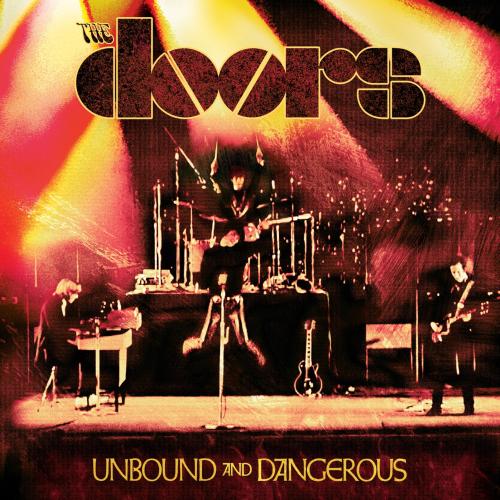
Unbound and Dangerous (Live - Remastered) The Doors
Album Info
Album Veröffentlichung:
2026
HRA-Veröffentlichung:
23.10.2026
Das Album enthält Albumcover
Entschuldigen Sie bitte!
Sehr geehrter HIGHRESAUDIO Besucher,
leider kann das Album zurzeit aufgrund von Länder- und Lizenzbeschränkungen nicht gekauft werden oder uns liegt der offizielle Veröffentlichungstermin für Ihr Land noch nicht vor. Wir aktualisieren unsere Veröffentlichungstermine ein- bis zweimal die Woche. Bitte schauen Sie ab und zu mal wieder rein.
Wir empfehlen Ihnen das Album auf Ihre Merkliste zu setzen.
Wir bedanken uns für Ihr Verständnis und Ihre Geduld.
Ihr, HIGHRESAUDIO
- 1 Introduction (Live, 1970) [2026 Mix] 00:28
- 2 Dead Cats, Dead Rats (Live, 1970) [2026 Mix] 01:47
- 3 Break On Through (to the Other Side) [Live, 1970] [2026 Mix] 04:43
- 4 When the Music's Over (Live, 1970) [2026 Mix] 14:39
- 5 Roadhouse Blues (Live, 1970) [2026 Mix] 06:08
- 6 Alabama Song (Whisky Bar) [Live, 1970] [2026 Mix] 01:50
- 7 Back Door Man (Live, 1970) [2026 Mix] 03:50
- 8 Five to One (Live, 1970) [2026 Mix] 04:30
- 9 Build Me a Woman (Live, 1970) [2026 Mix] 03:29
- 10 Petition the Lord With Prayer (Live, 1970) [2026 Mix] 00:45
- 11 Light My Fire (Live, 1970) [2026 Mix] 08:55
- 12 Crawling King Snake (Live, 1970) [2026 Mix] 05:24
- 13 Soul Kitchen (Live, 1969) [2026 Mix] 06:32
- 14 Bring Out Your Dead (Live, 1970) [2026 Mix] 00:22
- 15 The End (Live, 1970) [2026 Mix] 15:08
- 16 Thank You and Good Night (Live, 1970) [2026 Mix] 00:47
Info zu Unbound and Dangerous (Live - Remastered)
Neu remastert und abgemischt! „Unbound and Dangerous“, ein neues Doppel-Live-Album der Doors, erscheint am 23. Oktober, zusammengestellt von Robby Krieger und John Densmore gemeinsam mit dem langjährigen Toningenieur Bruce Botnick.
16 Aufnahmen von der „Roadhouse Blues Tour“ aus dem Jahr 1970, der Tour, die auf „Morrison Hotel“ folgte. Es handelt sich um dieselben Konzerte, aus denen „Absolutely Live“ hervorging – das einzige Live-Album der Doors, das noch zu Lebzeiten von Jim Morrison veröffentlicht wurde, wenn auch mit einer teilweise anderen Auswahl. Die Aufnahmen stammen von Konzerten in New York, Philadelphia, Pittsburgh und Detroit; die einzige Ausnahme bildet „Soul Kitchen“, aufgenommen am 21. Juli 1969 im Aquarius Theatre in Hollywood.
In den Liner Notes reflektieren Krieger, Densmore und Botnick über den gefährlichen Ruf, der der Band und insbesondere ihrem Sänger anhaftete. „Ich wusste von Anfang an, dass Jim gefährlich war. Talentiert und gefährlich“, erinnert sich Densmore. „Er schien alles herausfordern zu wollen. Und dann waren da noch seine Worte. Sie haben mich verführt: Sie sprachen von Freiheit, Meinungsfreiheit, der Freiheit, frei zu sein. Er wollte uns alle befreien. Was für ein Geschenk. Dieses Live-Album fängt diesen wilden Geist ein.“
Krieger spielt dieses Image jedoch herunter: „Es waren die Sechziger, Mann, alles war erlaubt, und wir hielten Jim nicht wirklich für gefährlich. Als die Kennedys nicht mehr da waren und Vietnam kam, das war die Gefahr, nicht die Doors.“ Dem Gitarristen zufolge waren die Momente, in denen die Band wirklich an die Grenze zur Gefahr geriet, die Konzerte in Miami und Cleveland, als die Menge außer Kontrolle geriet.
Für Botnick waren Gefahr und Emotionen bei den Doors jedoch untrennbar miteinander verbunden: Das Publikum strömte in Scharen zu den Konzerten und erwartete das Unerwartete, und Morrison verstand es, die Stimmung im Saal einzufangen und ging dabei jedes Mal bis an seine Grenzen.
Jim Morrison, Gesang
Ray Manzarek, Keyboards, Orgel, Keyboard-Bass
Robby Krieger, Gitarre
John Densmore, Schlagzeug
Aufgenommen am 21. Juli 1969 im Aquarius Theatre, Hollywood, Los Angeles
Produziert von Bruce Botnick
Digital remastered


With an intoxicating, genre-blending sound, provocative and uncompromising songs, and the mesmerizing power of singer Jim Morrison's poetry and presence, The Doors had a transformative impact not only on popular music but on popular culture.
The Doors' arrival on the rock scene in 1967 marked not only the start of a string of hit singles and albums that would become stone classics, but also of something much bigger - a new and deeper relationship between creators and audience. Refusing to be mere entertainers, the Los Angeles quartet relentlessly challenged, confronted and inspired their fans, leaping headfirst into the heart of darkness while other bands warbled about peace and love. Though they've had scores of imitators, there's never been another band quite like them. And 40 years after their debut album, The Doors' music and legacy are more influential than ever before.
Morrison's mystical command of the frontman role may be the iconic heart of The Doors, but the group's extraordinary power would hardly have been possible without the virtuosic keyboard tapestries of Ray Manzarek, the gritty, expressive fretwork of guitarist Robby Krieger and the supple, dynamically rich grooves of drummer John Densmore. From baroque art-rock to jazz-infused pop to gutbucket blues, the band's instrumental triad could navigate any musical territory with aplomb - and all three contributed mightily as songwriters.
The group was born when Morrison and Manzarek - who'd met at UCLA's film school - met again, unexpectedly, on the beach in Venice, CA, during the summer of 1965. Though he'd never intended to be a singer, Morrison was invited to join Manzarek's group Rick and the Ravens on the strength of his poetry. Krieger and Densmore, who’d played together in the band Psychedelic Rangers, were recruited soon thereafter; though several bassists auditioned of the new collective, none could furnish the bottom end as effectively as Manzarek's left hand. Taking their name from Aldous Huxley's psychotropic monograph The Doors of Perception, the band signed to Elektra Records following a now-legendary gig at the Whisky-a-Go-Go on the Sunset Strip.
Their eponymous first album, released in January 1967, kicked off with "Break on Through (to the Other Side)" and also featured the chart smash "Light My Fire", the scorching "Back Door Man" and the visionary masterpiece "The End". The Doors arrived fully formed, capable of rocking the pop charts and the avant-garde with one staggering disc. Before '67 was over, they'd issued the ambitious follow-up Strange Days, with such gems as "Love Me Two Times", "People
Are Strange" and "When the Music's Over".
Next came 1968's Waiting for the Sun, boasting "Hello, I Love You", "Love Street" and "Five to One". Over the next few years they minded over new territory on such albums as 1969's The Soft Parade (featuring "Touch Me" and "Tell All the People"), 1970's Morrison Hotel (which includes "Roadhouse Blues", "Peace Frog" and "Queen of the Highway") and 1971's L.A. Woman (boasting "Rider's on the Storm", "Love Her Madly" and the title track).
They released six studio albums in all, as well as a live album and a compilation, before Morrison's death in 1971. their electrifying achievements in the studio and onstage were unmatched in the annals of rock; and though Morrison's death meant the end of an era, Manzarek, Krieger and Densmore collaborated on two more original Doors albums, Other Voices and Full Circle, and a set of tracks they composed to accompany Morrison's 1969 recording of his poetry, released in 1978 as An American Prayer. They also pursued individual music projects, books, theatrical productions and other enterprises - and remain restlessly creative to this day.
In the decades since the Doors' heyday, the foursome has loomed ever larger in the pantheon of rock - and they remain a touchstone of insurrectionary culture for writers, activists, visual artists and other creative communities. Their songs, featured in an ever-increasing number of films, TV shows, video games and remixes, always sound uncannily contemporary. No matter how the musical and cultural tides turn, The Doors will always be ready to help a new wave of listeners break on through to the other side. (Source: jam inc.)
Dieses Album enthält kein Booklet