






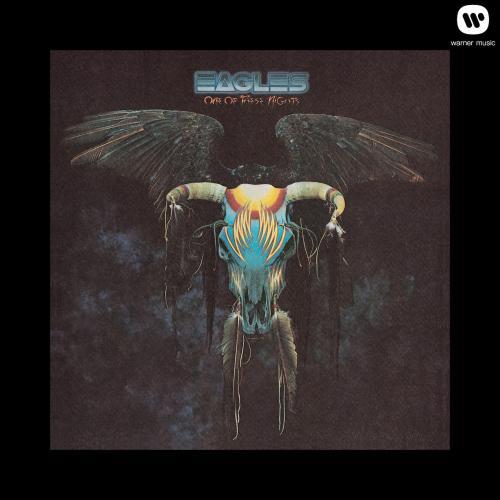
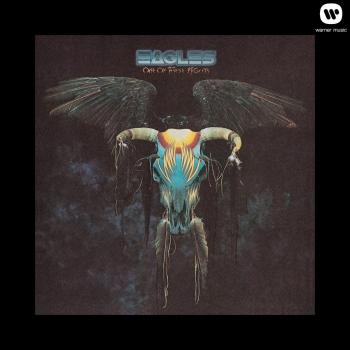
One Of These Nights (Remastered) Eagles
Album info
Album-Release:
1975
HRA-Release:
30.06.2013
Album including Album cover
I`m sorry!
Dear HIGHRESAUDIO Visitor,
due to territorial constraints and also different releases dates in each country you currently can`t purchase this album. We are updating our release dates twice a week. So, please feel free to check from time-to-time, if the album is available for your country.
We suggest, that you bookmark the album and use our Short List function.
Thank you for your understanding and patience.
Yours sincerely, HIGHRESAUDIO
- 1 One Of These Nights 04:51
- 2 Too Many Hands 04:43
- 3 Hollywood Waltz 04:04
- 4 Journey Of The Sorcerer 06:40
- 5 Lyin' Eyes 06:22
- 6 Take It To The Limit 04:49
- 7 Visions 03:58
- 8 After The Thrill Is Gone 03:56
- 9 I Wish You Peace 03:45
Info for One Of These Nights (Remastered)
One of These Nights is the fourth studio album by the Eagles, released in 1975. The record's title song became the group's second #1 single on the Billboard Hot 100, in July of that year.
The album released three Top 10 singles, 'One of These Nights', 'Lyin' Eyes', and 'Take It To The Limit'. Those singles reached #1, #2, and #4 respectively. The album became the band's first album to top the charts. The album sold 4 million copies and won the band its first Grammy for 'Lyin' Eyes'. 'Take It To The Limit' became the band's first gold single and the album was nominated for album of the year.
The album also features the live concert staple and ballad 'After The Thrill Is Gone'. One of These Nights is the last Eagles album to feature Bernie Leadon. Leadon would leave the band after the One Of These Nights Tour. The seventh track, 'Visions', is the only Eagles song on which Don Felder sang lead vocals.
The album would become the band's breakthrough album, transforming them to international superstars and establishing them as America's number one band. The band would go on a worldwide tour to promote the album; Fleetwood Mac opened for the band during the tour.
'The Eagles' fourth album maneuvered the group away from their folk roots.... One of These Nights was the Eagles' best yet.' (Q Magazine)
Glenn Frey, lead vocals, guitar, keyboards, harmonium
Don Henley, lead vocals, drums, percussion, tablas
Randy Meisner, lead vocals, bass guitar, guitar
Bernie Leadon, lead vocals, guitar, banjo, mandolin, steel guitar, pedal steel
Don Felder, lead vocals, guitar, slide guitar, organ
Additional musicians:
David Bromberg, fiddles (on 'Journey of the Sorcerer')
The Royal Martian Orchestra (strings on 'Journey of the Sorcerer')
Albhy Galuten, synthesizer (on 'Hollywood Waltz')
Jim Ed Norman, piano (on 'Lyin' Eyes' and 'Take It to the Limit')
Jim Ed Norman, conductor
Jim Ed Norman and The Eagles, string arrangements
Recorded at Mac Emmerman's Criteria Studios, Miami and the The Record Plant Los Angeles
Engineered by Allan Blazek, Michael Braunstein, Ed Mashal, Bill Szymczyk, Michael Verdick, Don Wood
Produced by Bill Szymczyk
Digitally remastered

No biography found.
This album contains no booklet.