


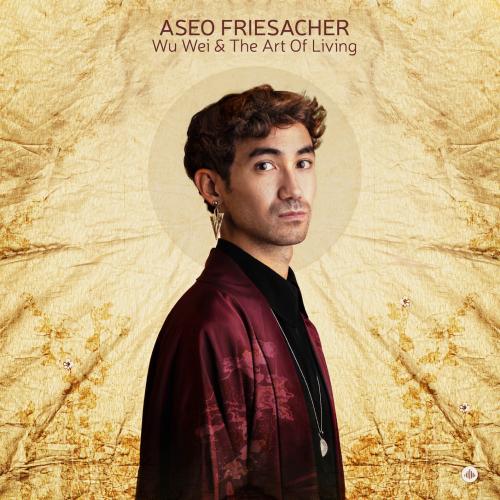
Wu Wei & The Art of Living Aseo Friesacher
Album info
Album-Release:
2026
HRA-Release:
23.01.2026
Album including Album cover Booklet (PDF)
- 1 Wu Wei 06:51
- 2 One 09:09
- 3 Home 07:09
- 4 Reflections in the Water 05:47
- 5 Seven Virtues, Seven Sins 07:49
- 6 Samsara 06:26
- 7 Blues for Sadako 06:29
- 8 Healing 03:25
Info for Wu Wei & The Art of Living
All the compositions on this album are original works, created during a period of personal growth and artistic exploration. Each piece represents a chapter in a larger story — one that reflects not only my journey as a musician but also my evolving understanding of life, purpose, and meaning.
The opening track, “Wu Wei,” sets the tone. A central concept in Taoist philosophy, Wu Wei translates to “non-action” — not inaction, but effortless action, or moving with the flow of life rather than against it. As a musician, this idea resonates deeply: to be in harmony with your surroundings, to create without forcing, to live and express from a place of presence.
“One” speaks to the longing for unity in a divided world. Despite conflict, disagreement, and disconnection, there is always a deeper thread that binds us together — a shared humanity that transcends our differences.
“Home” represents the need for belonging, safety, and grounding. For some, home is a physical place; for others, it’s something they must find or create. But for all of us, the feeling of home is essential to live a fulfilled life.
“Reflections in the Water” is an introspective piece — a reminder of where we come from and who we are at our core. Influenced by classical and impressionistic traditions, it pays homage to the great composers who have shaped music history and continue to inspire me.
“Seven Virtues, Seven Sins” explores the dualities of human nature — the push and pull between good and evil, right and wrong, light and shadow. It’s a reflection on the moral questions we all face and the deeper quest for inner truth and balance.
In “Samsara,” the cyclic nature of existence is made audible: life, death, and rebirth — endlessly repeating. It reminds us that every end carries the seed of a new beginning.
“Blues for Sadako” is a tribute to Sadako Sasaki, a young girl who became a symbol of peace after the atomic bombing of Hiroshima in 1945. Her story, and the thousands of paper cranes she folded, speak of hope, remembrance, and the resilience of the human spirit. This piece is dedicated to her and to all victims of war.
The final track, “Healing,” is a hymn for humanity. In times of pain and turmoil, sometimes what the world needs most is a moment of collective healing — a return to compassion, empathy, and wholeness.
Throughout this album, I’ve tried to express something honest — something that reflects the complexity of being alive. We live in a world full of goals, distractions, and expectations. Often, we chase success or run from discomfort, forgetting to be present in the moment. But life is not a race to the finish line. It is a process of becoming, of unfolding — just like a flower grows, slowly and naturally, in its own time.
You cannot force growth. You cannot force mastery. The moment you think you’ve arrived, life will humble you. There is no final destination — only the ongoing path.
Obstacles will come. Resistance will arise. But perhaps the key is not to fight or flee, but to accept — to let go, and to allow life to unfold. This is the essence of Wu Wei. To move in harmony with the world, to follow your inner voice, to grow in all directions like a tree, to live fully in the present — this is not just a philosophy, but a way of life.
This album is an invitation to listen — not just to the music, but to yourself. - Aseo Friesacher
Aseo Friesacher, piano
Koen Smits, trumpet
Johannes Fend, double bass
Nikolas Tsangaris, percussion
Claudio Jr De Rosa, tenor saxophone
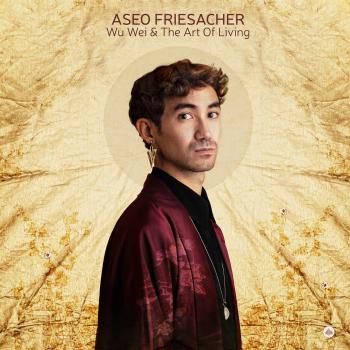
Aseo Friesacher
is a pianist and composer born in Vienna, Austria. Since an early age he was very interested in music and he was able to pick up melodies and rhythms easily. It was soon clear to him that a music career is the only thing he wants to pursue. Aseo started to play the piano at an age of 6. He was also member of the famous Vienna Boy’s Choir and got the chance to tour around the world and sing in big concert halls like the Carnegie Hall in New York or the Tokyo Opera City Hall.
At the age of fourteen Aseo found his love to jazz music by listening to songs of Oscar Peterson, Dave Brubeck and Didier Squiban. Eventually he formed his own trio with which he played in prestigious venues as the UNO-City. In 2014 the Aseo Friesacher Trio won the 1st price of the Podium.Jazz Competition in Austria. Since then Aseo became very active in the Viennese jazz scene and played in various formations and bands such as the „Princetones“ and the „Libal Bigband“. In 2015 he started his jazz piano studies in the Vienna Conservatory of Music & Arts and studied with Aaron Wonesch. Later he graduated at the Codarts Conservatory in Rotterdam. In addition to his musical growth he could get the chance to have workshops from several piano masters as Harold Mabern, Tamir Hendelman, Peter Beets and Cory Henry.
In 2022 Aseo obtained his master degree in music from the Royal Conservatoire The Hague and is based in the Netherlands since. He became very active in the dutch music scene as well as internationally, playing in several bands such as Aseo Trio, Loek van den Berg Quintet, Kaiju Project, Vishwa and Sinan’s Sufidelica Project amongst others. Also in spring 2019 Aseo got accepted to be part of the Jong Metropole which is a unique collaboration between the Metropole Orkest, the NJO (National Youth Orchestra of the Netherlands) and the NJJO (National Jazz Youth Orchestra of the Netherlands). Through the Jong Metropole Aseo could collaborate with conductors like Miho Hazama and Jules Buckley.
Booklet for Wu Wei & The Art of Living