

[].
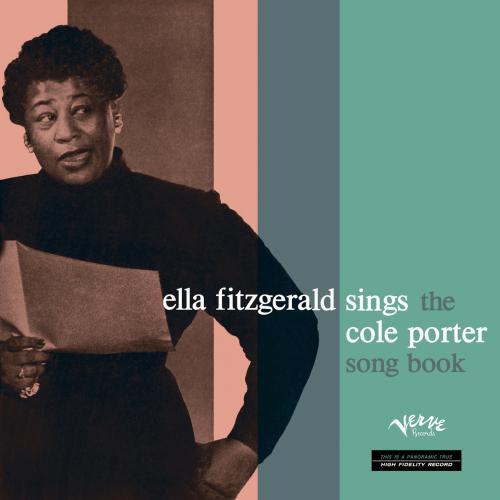
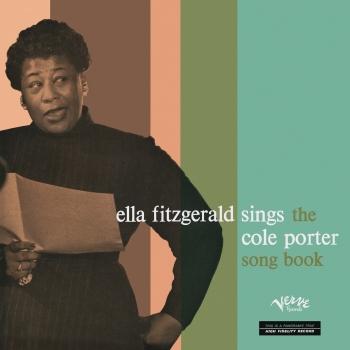
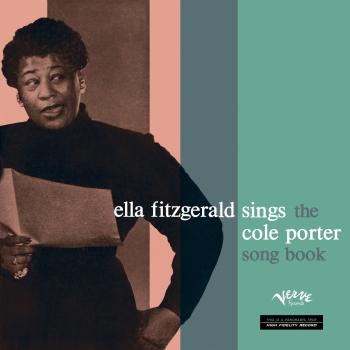
Ella Fitzgerald Sings The Cole Porter Song Book (Mono Remastered) Ella Fitzgerald
Album info
Album-Release:
1956
HRA-Release:
26.06.2026
Album including Album cover
I`m sorry!
Dear HIGHRESAUDIO Visitor,
due to territorial constraints and also different releases dates in each country you currently can`t purchase this album. We are updating our release dates twice a week. So, please feel free to check from time-to-time, if the album is available for your country.
We suggest, that you bookmark the album and use our Short List function.
Thank you for your understanding and patience.
Yours sincerely, HIGHRESAUDIO
- 1 All Through The Night 03:15
- 2 Anything Goes 03:23
- 3 Miss Otis Regrets (She's Unable To Lunch Today) 03:00
- 4 Too Darn Hot 03:46
- 5 In The Still Of The Night 02:38
- 6 I Get A Kick Out Of You 04:00
- 7 Do I Love You? 03:51
- 8 Always True To You In My Fashion 02:50
- 9 Let's Do It 03:33
- 10 Just One Of Those Things 03:30
- 11 Ev'ry Time We Say Goodbye 03:32
- 12 All Of You 01:45
- 13 Begin The Beguine 03:37
- 14 Get Out Of Town 03:24
- 15 I Am In Love 04:08
- 16 From This Moment On 03:16
- 17 I Love Paris 04:56
- 18 You Do Something To Me 02:20
- 19 Ridin' High 03:20
- 20 Easy To Love 03:24
- 21 It's All Right With Me 03:06
- 22 Why Can't You Behave? 05:04
- 23 What Is This Thing Called Love? 02:01
- 24 You're The Top 03:37
- 25 Love For Sale 05:52
- 26 It's De-Lovely 02:44
- 27 Night And Day 03:04
- 28 Ace In The Hole 01:57
- 29 So In Love 03:50
- 30 I've Got You Under My Skin 02:43
- 31 I Concentrate On You 03:12
- 32 Don't Fence Me In 03:18
Info for Ella Fitzgerald Sings The Cole Porter Song Book (Mono Remastered)
Released in 1956 as the inaugural album on the newly founded Verve label, "Ella Fitzgerald Sings the Cole Porter Song Book" marked a major turning point in Ella Fitzgerald's career and launched her landmark Song Book series, pairing her with producer Norman Granz, arranger-conductor Buddy Bregman, and a full studio orchestra for 32 selections spanning Porter's catalog. Recorded across February and March of 1956, the album frames Ella's immaculate phrasing and clarity with polished West Coast orchestration that blends swing, ballad writing, and classic Hollywood sheen, emphasizing the lyrical wit and melodic elegance of Porter's writing. Celebrated upon release and formative in shaping both Verve's identity and Ella's artistic trajectory, it remains a cornerstone of her discography and a defining document of 20th century American popular interpretation.
"Ella Fitzgerald had the ability to personalize some of the most recognizable material from the foremost songwriters in American popular music history. In this instance, the combination of Cole Porter's words and Fitzgerald's interpretation of them created one of the most sought after sessions in vocal history -- embraced by jazz and pop fans alike, transcending boundaries often associated with those genres. Originally released in 1956 on the Verve label, such standards as "Night and Day," "I Love Paris," "What Is This Thing Called Love," "I've Got You Under My Skin," "You're the Top," and "Love for Sale" secured one of Ella Fitzgerald's crowning moments. The success of these early Porter (and previous Gershwin) sessions brought about numerous interpretations of other songbooks throughout the next several years including those of Rodgers and Hart, Duke Ellington, Johnny Mercer, Harold Arlen, and Irving Berlin." (Al Campbell, AMG)
Ella Fitzgerald, vocals
Buddy Bregman, conductor
Pete Candoli, trumpet
Harry “Sweets” Edison, trumpet
Maynard Ferguson, trumpet
Conrad Gozzo, trumpet
Milt Bernhart, trombone
Joe Howard, trombone
Lloyd Ulyate, trombone
George Roberts, bass trombone
Herb Geller, bass trombone
Bud Shank, alto saxophone
Bob Cooper, tenor saxophone
Ted Nash, tenor saxophone
Chuck Gentry, baritone saxophone
Paul Smith, piano
Barney Kessel, guitar
Joe Mondragon, double bass
Alvin Stoller, drums
Los Angeles, February 7-9 & March 27, 1956
Bonus Track:
Ella Fitzgerald, vocals
Don Abney, piano
Herb Ellis, guitar
Ray Brown, double bass
Jo Jones, drums
Konserthuset, Stockholm, April 29, 1957
Digitally remastered
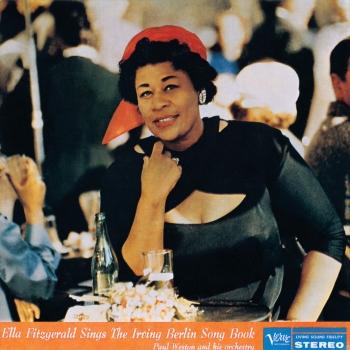
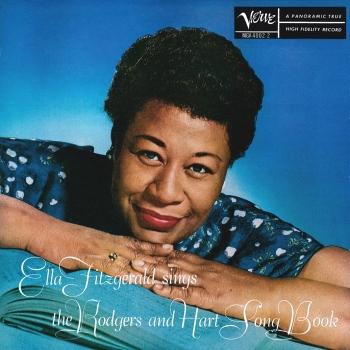
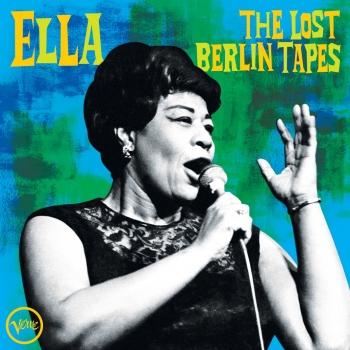
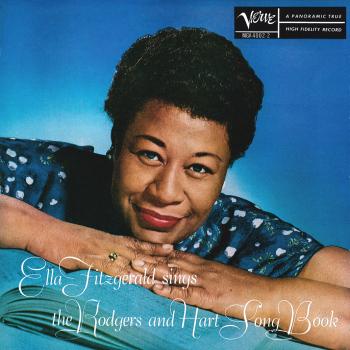
Ella Fitzgerald (1917-1996)
was, along with Sarah Vaughan and Billie Holiday, one of the most important vocalists to emerge from the big-band era. Her style is marked by a sunny outlook, a girlish innocence, and a virtuoso command of her voice.
Fitzgerald was born out of wedlock in Newport News, Virginia, to a laundress mother and a father who disappeared when she was three years old. Along with her mother and her mother’s new boyfriend who functioned as a stepfather, she soon moved to Yonkers, New York, where she began her schooling. Around the third grade she started dancing, a pursuit that became almost an obsession. In 1932, when she was fifteen, her mother died suddenly of a heart attack. Her stepfather treated her badly, but an aunt took the teenager to live with her in Harlem. This arrangement did not last long; Fitzgerald ran away in 1934 to live on the streets.
Late that year she won a talent contest at the Apollo Theater; she had entered as a dancer, but nervousness caused her to sing instead. Several months later she joined drummer Chick Webb’s big band, where she mostly sang novelties like 'Vote for Mr. Rhythm'. In 1938 she recorded 'A-Tisket, A-Tasket', her own adaptation of a turn-of-the-century nursery rhyme, which took the country by storm and eventually sold a million copies. When Webb died in 1939 the band’s management installed Fitzgerald as leader.
In 1942 the band broke up and Fitzgerald became a single act, touring with various other popular names of the day. She also became interested in scat singing and the newly emerging style known as bebop, and in 1945 she recorded a landmark version of 'Flying Home.' Several tours with the Dizzy Gillespie band also contributed to her assimilation of the bebop style.
In the late 1940s Fitzgerald began to tour with the Jazz at the Philharmonic troupe, working with such leading musicians as saxophonist Lester Young, trumpeter Roy Eldridge, pianist Oscar Peterson, and bassist Ray Brown, to whom she was married for four years. JATP impresario Norman Granz became increasingly influential in her career, and in 1953 he became her manager.
Three years after that he became her record producer as well, recording her on his own Verve label. He wasted little time in having Fitzgerald record a double album of Cole Porter songs. Fitzgerald made many wonderful albums for Verve in the following decade, but the six songbooks occupy a special place in her discography. They were instrumental in expanding Fitzgerald’s appeal beyond that of a 'jazz singer' and creating a demand for her in venues not usually open to jazz artists.
For die-hard jazz fans, though, the well-polished jewels of the songbook series lack the raw energy of Fitzgerald’s live performances. Happily, Granz released several landmark concert albums by her as well. Especially exciting was a 1960 Berlin concert, which featured an electrifying performance of an impromptu take on 'Mack the Knife,' which became a Top 30 single. Fitzgerald usually performed with a trio or quartet, but there were also appearances with larger groups, such as the Duke Ellington and Count Basie orchestras.
By the 1960s Fitzgerald had become wealthy enough to retire, but the love of performing drove her on — she appeared regularly until just a couple of years before her death in 1996. Sidemen came and went, but except when health problems intervened she performed as much as humanly possible, sometimes singing concerts in two different cities in one day. Source: Verve Music (Phil Bailey). Excerpted from Ken Burns’ Jazz: The Definitive Ella Fitzgerald
This album contains no booklet.