

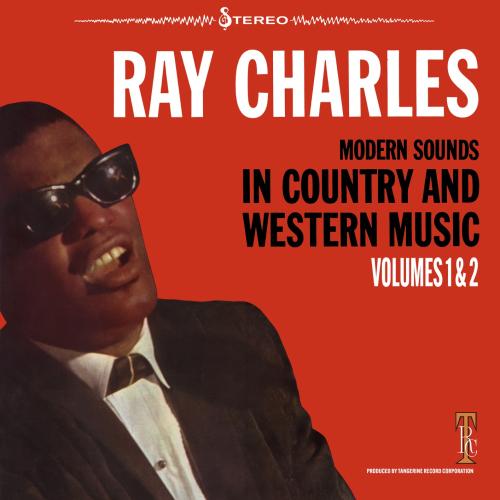
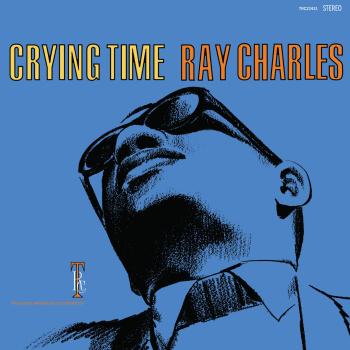
Modern Sounds In Country And Western Music, Vols 1 & 2 (2024 Remaster) Ray Charles
Album info
Album-Release:
1962
HRA-Release:
31.03.2026
Album including Album cover
- 1 Bye Bye Love (2024 Remaster) 02:13
- 2 You Don’t Know Me (2024 Remaster) 03:18
- 3 Half As Much (2024 Remaster) 03:29
- 4 I Love You So Much It Hurts (2024 Remaster) 03:36
- 5 Just A Little Lovin' (Will Go A Long Way) (2024 Remaster) 03:32
- 6 Born to Lose (2024 Remaster) 03:15
- 7 Worried Mind (2024 Remaster) 02:57
- 8 It Makes No Difference Now (2024 Remaster) 03:36
- 9 You Win Again (2024 Remaster) 03:32
- 10 Careless Love (2024 Remaster) 03:59
- 11 I Can't Stop Loving You (2024 Remaster) 04:16
- 12 Hey, Good Lookin' (2024 Remaster) 02:12
- 13 You Are My Sunshine (2024 Remaster) 03:01
- 14 No Letter Today (2024 Remaster) 03:01
- 15 Someday (You’ll Want Me To Want You) (2024 Remaster) 02:41
- 16 Don’t Tell Me Your Troubles (2024 Remaster) 02:08
- 17 Midnight (2024 Remaster) 03:17
- 18 Oh, Lonesome Me (2024 Remaster) 02:11
- 19 Take These Chains From My Heart (2024 Remaster) 02:58
- 20 Your Cheatin' Heart (2024 Remaster) 03:36
- 21 I’ll Never Stand In Your Way (2024 Remaster) 02:20
- 22 Making Believe (2024 Remaster) 02:53
- 23 Teardrops In My Heart (2024 Remaster) 03:05
- 24 Hang Your Head In Shame (2024 Remaster) 03:13
Info for Modern Sounds In Country And Western Music, Vols 1 & 2 (2024 Remaster)
Ray Charles’s Modern Sounds in Country and Western Music, Volumes 1 & 2 are major landmarks in American culture. Charles demonstrated that great songs with signature performances work in all genres. “I Can’t Stop Loving You” was a standard in country, soul and R&B, as he proved. Modern Sounds also brought America together during the Sixties’ civil rights movement. Charles became one of the first recording artists to have ownership and complete control of the masters. Modern Sounds in Country and Western Music has been listed among the greatest slbums of all time, along with the Beatles, Dylan, Motown, Springsteen, Hendrix and the Beach Boys.
These groundbreaking albums, Modern Sounds in Country and Western Music, Vols. 1 & 2 are being remastered and reissued for the first time in 24bit.
This past fall, Ray was honored by the Grand Ole Opry with An Opry Salute to Ray Charles, with performances celebrating the iconic Modern Sounds tracks and his contributions to country music. In addition, Charles was inducted into both the Austin City Limits Hall of Fame, a program on which he performed multiple times, and the DownBeat Jazz Hall of Fame.
“Ray Charles was one of the most important artists in the history of American popular music,” says Concord Records President John Burk, “and his Modern Sounds albums were some of his most impactful works. In addition to massive commercial success, these incredible recordings had a huge social and cultural impact, breaking down long established genre and racial barriers.”
“We are excited about this eventful release, an opportunity for longtime fans to enjoy this music and to introduce new generations,” says Valerie Ervin, President of the Ray Charles Foundation.
Modern Sounds in Country and Western Music, Vol.1 became an instant classic when it was first released in 1962. The album spawned four chart-topping singles: “Born to Lose,” “Careless Love,” “You Don’t Know Me,” and “I Can’t Stop Loving You,” the latter (and the album itself) being RIAA-certified Gold in only one month.
The success led to the recording of Modern Sounds in Country and Western Music, Vol. 2. Focusing more on balladry, one side featured performances by the Ray Charles Big Band with the Raelettes, and the other with a string section and the Jack Halloran Singers. Like its predecessor, it was released to both critical and commercial acclaim. In 1999, Vol. 1 was inducted into the GRAMMY Hall of Fame for “historical significance,” as was the lead single, “I Can’t Stop Loving You,” in 2001.
Many musicians possess elements of genius, but only one—the great Ray Charles—so completely embodied the term that it was bestowed upon him as a nickname. His staggering achievements over a 58-year career include 17 GRAMMY Awards, induction into the Rock and Roll Hall of Fame, a Lifetime Achievement and the President’s Merit Award, the Presidential Medal for the Arts, France’s Legion of Honor, the Kennedy Center Honors, a NAACP Image Awards’ “Hall of Fame Award,” and numerous other music Halls of Fame, including those for Jazz and Rhythm & Blues, a testament to his enormous influence.
Charles successfully mastered (and forever changed) the blues, jazz, gospel, rock, pop, and country music landscapes, continually airing his soulful heart. He teamed up with the best of the best in each stylistic genre, including B.B. King, Aretha Franklin, Lou Rawls, Hank Williams, Willie Nelson, Stevie Wonder, and countless others. As he describes. “I’m not a country singer. I’m a singer who sings country songs. I’m not a blues singer, but I can sing the blues. I’m not really a crooner, but I can sing love songs. I’m not a specialist, but I’m a pretty good utility man. I can play first base, second base, shortstop. I can catch and maybe even pitch a little.” “Genius” doesn’t begin to describe it.
"These two albums saw Ray Charles altering country music’s perception, revealing its storylines’ universality. Thanks to the exceptional remastering achieved by Grammy-winning audio engineer Michael Graves – now sound better than ever.
Ray Charles, piano, vocals, producer
The Ray Charles Big Band
Hank Crawford, alto saxophone
Raelets, backing vocals
The Jack Halloran Singers, backing vocals
Gil Fuller, arrangements (big band)
Gerald Wilson, arrangements (big band)
Marty Paich, arrangements (strings)
Recorded February 5, 7, and 15, 1962 at Capitol, New York; United Western, Hollywood (Vol. 1)
Recorded September 5 & 7, 1962 at Capitol, New York City; United Western, Hollywood (Vol. 2)
Digitally remastered
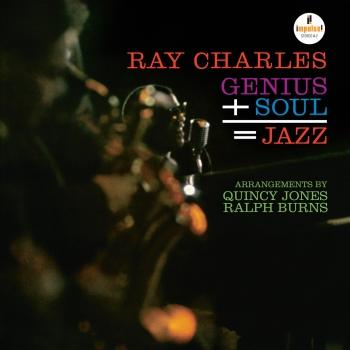
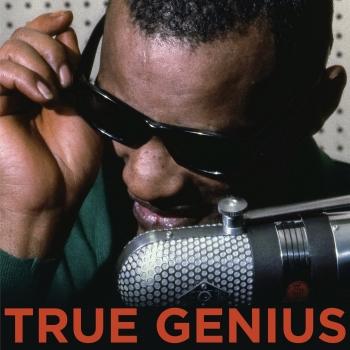



Ray Charles
The name Ray Charles is on a Star on Hollywood Boulevard’s Walk of Fame. The name Ray Charles designates a superstar worldwide. His bronze bust is enshrined in the Playboy Jazz Hall of Fame. There is the bronze medallion that was cast and presented to him by the French Republic on behalf of the French people. In just about every Hall of Fame that has anything to do with music, be it Rhythm & Blues, Jazz, Rock & Roll, Gospel or Country & Western, Ray’s name is very prominently displayed. There are many awards given to him in the foregoing categories as proof.
Probably the strongest element in Ray Charles’ life, and the most concentrated driving force, was music. Ray often said, “I was born with music inside me. That’s the only explanation I know.”
Ray Charles was not born blind. In fact, it took almost seven years for him to lose his sight in its entirety, which means he had seven years to see the joy and sadness of this big wonderful world – a world he would never see again. As a seven year old child, in searching for light, he stared at the sun continuously, thereby eliminating all chances of the modern-day miracle, cornea transplants – a surgery unheard of in 1937.
Perhaps the reason that Ray Charles made music his mistress and fell madly in love with the lady is that music was a natural to him. Ray sat at a piano and the music began; he opened his mouth and the lyrics began. He was in absolute control.
But the rest of his life was not quite so simple. Ray was born at the very beginning of the Great Depression – a depression that affected every civilized country in the world. Ray was born in 1930 in Albany, Georgia, the same year that another Georgia native by the name of Hoagy Carmichael, was already making his mark on the world. In 1930, the year of Ray’s birth, Hoagy recorded a song that became an all-time classic and remains so to this day; a song titled “Stardust.” It’s ironic that these two Georgia natives would someday cross paths again, as they did 30 years later when Ray Charles was asked by the State of Georgia to perform, in the Georgia Legislative Chambers, the song they had selected as their state song. That song was Ray’s version of “Georgia,” written by Hoagy Carmichael. Hoagy, who unfortunately was too ill to attend the event, was listening via telephone/satellite tie-up.
Ray’s mother and father, Aretha and Bailey, were “no-nonsense” parents. Even after Ray lost his sight, his mother continued to give him chores at home, in the rural area in which they lived, such as chopping wood for the wood burning stove in the kitchen in order for them to prepare their meals. Chores such as this often brought complaints from the neighbors, which were met with stern words from Mrs. Robinson. She told them her son was blind, not stupid, and he must continue to learn to do things, not only for himself, but for others as well. Unfortunately, Ray lost the guidance of his mother and the counseling of his father at a very young age. At 15 years old, Ray Charles was an orphan, but he still managed to make his way in this world under very trying conditions; living in the South and being of African-American heritage, plus being blind and an orphan.
Ray refused to roll over and play dead. Instead he continued his education in St. Augustine, at Florida’s State School for the Deaf and Blind. A few years later, Ray decided to move. His choice was Seattle, Washington. It was in Seattle that Ray recorded his first record. It was also in Seattle that the seed was planted for a lifelong friendship with Quincy Jones. More information please visit the Ray Charles homepage.
This album contains no booklet.